Tracking the Legend: T-120 Sighting in Ranthambore
An early morning tracking session leads to an incredible encounter with T-120, one of Ranthambore's most majestic male tigers.
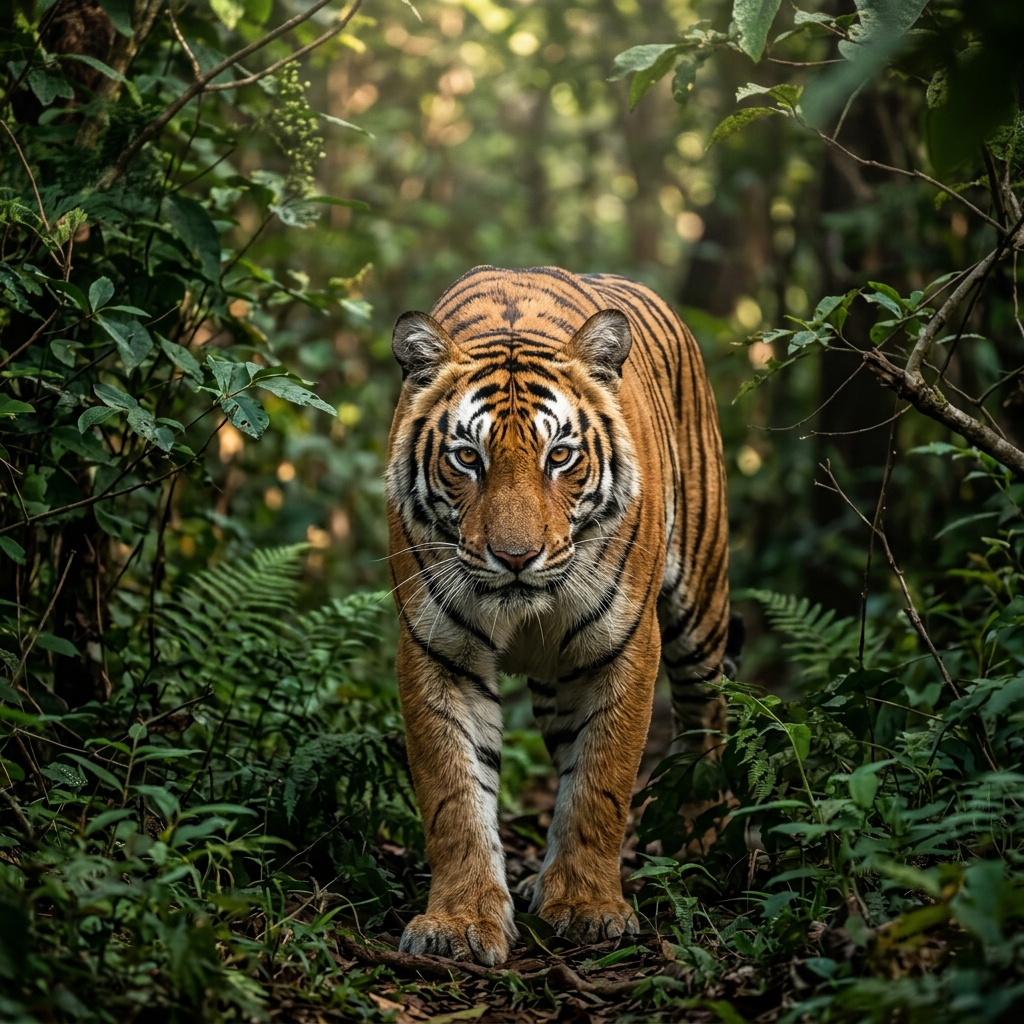
It was 5:45 AM when we entered Zone 2. The morning mist was resting low over the lake, and the air carried the crisp chill of a Rajasthan dawn. Ranthambore was silent, save for the hum of our gypsy's engine.
Naturalists know that finding a big cat isn't about luck—it's about listening to the forest.
The Alarm Calls
About twenty minutes into our drive, near the lake boundary, we heard it: the sharp, metallic bark of a Sambar Deer.
"Khaaa! ... Khaaa!"The call was directional, coming from the rocky slopes to our left. Sambar deer rarely lie. If they call, a predator is active. A minute later, a Langur Monkey chimed in from the canopy with a harsh, guttural cough. The tiger was on the move.
We positioned our vehicle near a known crossing point, shut off the engine, and waited.
The Encounter
And then, he appeared.
Emerging from the golden grass was T-120, a massive male tiger. He stepped onto the track, his amber eyes reflecting the soft morning light. The sheer power in his stride was hypnotic. He didn't look at us with fear or anger—only the calm confidence of an apex predator.
Here are the camera settings I used for the cover shot:
- Aperture:
f/4(to separate him from the busy scrub background) - Shutter Speed:
1/1200s(sufficient for a slow patrol walk) - ISO:
800(necessary for the low dawn light) - Focal Length:
600mm(shot from a safe and respectful distance)
Photography Tips for Forest Dappled Light
When photographing tigers in dense deciduous forests, you will often encounter harsh dappled light (bright sun spots mixed with dark shadows).
- Tip 1: Always expose for the highlights. A blown-out white stripe on a tiger's face is impossible to recover in post-processing.
- Tip 2: Use Spot Metering on the tiger's face to ensure the skin and eyes are perfectly exposed, letting the shadows fall where they may.
Written by Hiren Khatri
Hiren is a naturalist and wildlife photography mentor based in India. He leads photography tours and conducts ecological research with state forestry partners.