Research & Conservation
Combining field ecology, local community participation, and wildlife photography to protect endangered species and threatened forest habitats.
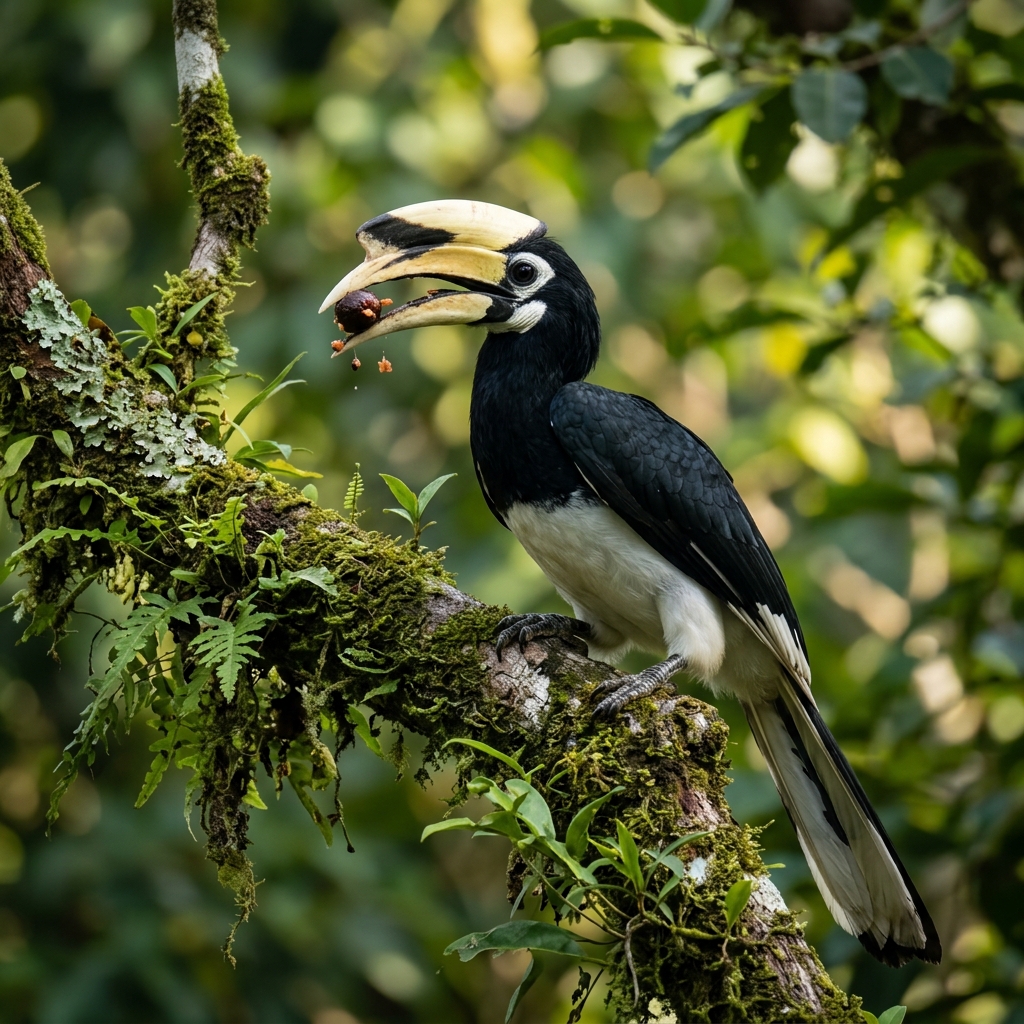
Malabar Hornbill Nest-Monitoring Project
## Project Overview The nesting biology of hornbills is highly unique and sensitive. During the breeding cycle, the female hornbill seals herself inside a tree hollow using mud, droppings, and wood pulp. She relies entirely on the male to bring her and the chicks food through a narrow slit for up to 90 days. If the male is poached or if nesting trees are cut down, the entire family perishes. This project focuses on identifying nesting cavities of the **Malabar Pied Hornbill** and **Great Indian Hornbill** across Dandeli, protecting them from logging, and involving local forest communities in monitoring efforts. ## Key Goals & Accomplishments 1. **Community-Led Tracking** * Trained 12 youths from the local Sidhi and Gowli tribal communities as forest guides and nest protectors. * Created sustainable eco-tourism income for local trackers, reducing dependency on forest timber extraction. 2. **Habit Protection** * Successfully lobbied for the preservation of 35 old-growth *Terminalia bellirica* (Beheda) and *Ficus* trees containing active nesting cavities. * Conducted annual nest-monitoring workshops for forest rangers.